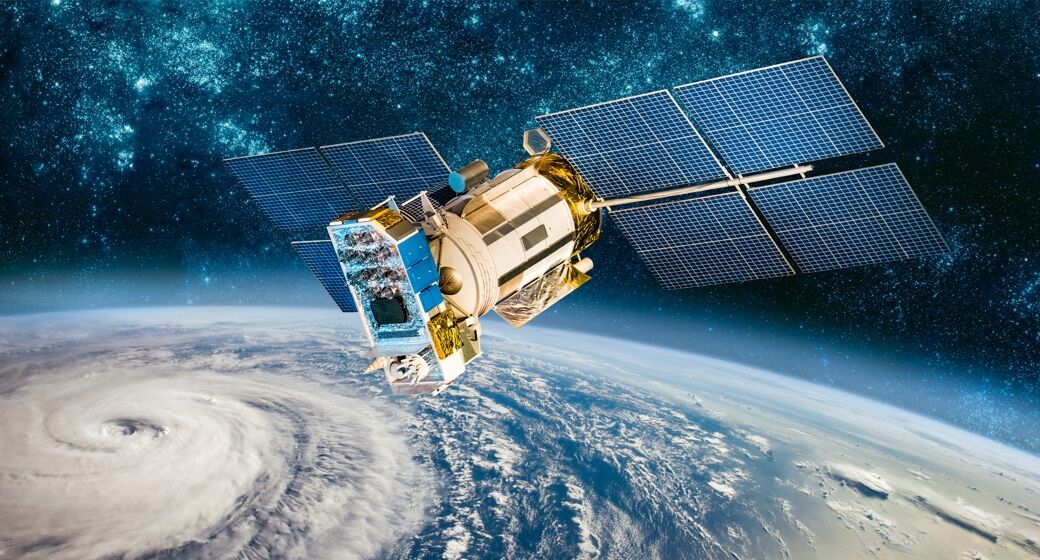
Meteorology and ocean sciences are mission-critical pillars of high-performance computing, where every bit of data processed translates into vital insights for global safety and economic stability. As a cornerstone of computational science, the ability to accurately simulate Earth's systems is essential for understanding our changing planet. By delivering high-fidelity weather and climate predictions, this field plays a fundamental role in safeguarding lives, protecting critical infrastructure, and empowering a more resilient and sustainable future for society. The high-performance computing solution delivers the architectural innovation and throughput required to accelerate simulations of typhoons and extreme weather events. By transforming massive data into precise predictions, it empowers researchers to safeguard lives and drive scientific breakthroughs.
Industry Overview
Challenges
Need for Higher Computing Power
More precise weather forecasts need higher-resolution numerical computation, drastically increasing computing power demands.
Need for Faster Computing
The weather service requires fast and efficient computing to reduce simulation time and support more frequent forecasts.
Need for Innovative Technology
Meteorogolical advancements rely on innovative computing platforms and numerical forecast models.
Related Products
Foundational Hardware

2U2P Balanced Model
Application Scenarios

Weather Forecasting
Precision weather forecasting transforms massive datasets from satellites and stations into actionable atmospheric insights, spanning from hourly updates to 30-day projections. This mission-critical work is essential for mitigating the impact of extreme weather on global safety and infrastructure. TaiShan accelerates these complex simulations, providing the architectural innovation and high-throughput required for next-generation modeling. By optimizing a comprehensive suite of leading industry models—including standards such as WRF and GFS, alongside advanced solvers like GRAPES and BCC—TaiShan delivers a significant performance boost while ensuring the high-fidelity accuracy required for scientific breakthroughs.

Climate & Marine Simulation
Understanding the complexities of Earth's systems—from glacier dynamics and sea-level rise to carbon cycles and El Niño oscillations—demands extreme-scale computational power. The high-performance computing solution empowers researchers to achieve higher simulation fidelity while significantly accelerating time-to-insight. By providing a high-throughput architecture optimized for industry-standard models such as CESM, NEMO, and ROMS, TaiShan enables scientists to tackle the most demanding climate challenges and drive breakthroughs for a more resilient planet.