Life sciences research is advancing through disciplines such as neuroscience, genomics, epigenetics, and proteomics, utilizing mathematical modeling and bioinformatics to achieve precise predictions of biological systems. This evolution relies on the massive processing power of high-performance computing clusters to handle increasingly data-intensive workloads. As AI becomes a core driver, deep learning accelerates multi-omics data mining while breakthroughs like AlphaFold redefine protein structure prediction. The high-performance computing solution fuses diverse computing resources to significantly enhance R&D efficiency and provide a robust foundation for AI for Science (AI4S) innovation.
Industry Overview
Related Products
Foundational Hardware
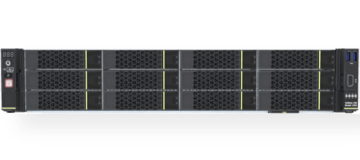
2U2P Balanced Model
Application Scenarios
Genome Sequencing
Genome sequencing decodes the genetic blueprint to enable precision medicine and democratize healthcare through high-throughput technologies.
To manage the complex I/O, CPU, and memory-intensive demands of genomic data, the high-performance computing solution delivers the architectural innovation required for deep data mining. With over 50 optimized industry-standard applications, including GATK, ont-tombo, and HISAT2, TaiShan accelerates the journey from raw sequences to life-saving clinical insights.
Cryogenic Electron Microscopy (Cryo-EM)
Cryo-EM captures high-resolution 3D structures of macromolecules to unlock atomic-level insights for structural biology and drug discovery. To address the extreme computational intensity and high-speed I/O bottlenecks of 3D reconstruction, the high-performance computing solution delivers an end-to-end architecture designed for massive data processing. By optimizing industry-standard software such as RELION and EMAN2, TaiShan accelerates complex workflows, transforming raw projections into high-fidelity molecular maps to drive scientific breakthroughs.
Protein Structure Analysis
With large-scale computing, this technology predicts 3D structures of proteins and analyzes how they relate to functions using molecular dynamics simulations or AI models. It greatly shortens protein structure analysis to tangibly facilitate disease research and medication development. TaiShan has supported protein analysis software like AlphaFold, HHblits, PSIPRED, and CNCI.
Application Cases
AlphaFold2
AlphaFold is a top-notch tool for protein structure prediction. Trained on protein structures and sequences from the Protein Data Bank (PDB), it predicts 3D structures from protein sequences, faciliting scientific analytics of protein functions and biological activities.